Asthma
Find a pulmonologistIf you experience chest tightness, wheezing or shortness of breath, you might be experiencing asthma. Advocate Health Care is here to help you with asthma – from initial diagnosis through treatment.
What is asthma?
Asthma is a chronic lung condition that often starts in childhood and continues into adulthood. It causes the airways in your lungs to swell, tighten and fill with mucus. Common asthma symptoms include difficulty breathing, wheezing and coughing. These symptoms can often lead to asthma attacks.
What causes asthma?
The exact cause of asthma is relatively unknown, but there are certain factors that can trigger the condition. Certain allergens or asthma triggers can cause asthma attacks, causing your airways to be inflamed and narrowed. The lining of the airway passages in your lungs become swollen, and the muscles tighten which restricts airflow and your ability to breathe.
What can trigger asthma?
Asthma can be triggered by a variety of factors. Common triggers can include:
- Air pollution
- Pet dander
- Sudden weather changes or colder temperatures
- Dust mites, mold or pollen
- Exercise and other physical activity
- Medicines, such as nonsteroidal anti-inflammatory drugs (NSAIDs)
- Respiratory infections and colds
- Strong emotions, stress or anxiety
- Tobacco smoke
Can allergies trigger asthma?
Yes, allergies can trigger asthma. While allergies aren’t the only trigger of asthma, it’s common. This specific type of asthma is often called allergic asthma.
When a person breathes in certain allergens, it can cause the immune system to overreact, which can lead to airway inflammation, making breathing difficult. Common triggers for allergic asthma often come from environmental allergens like pollen, dust, mold and pet dander.
Asthma symptoms
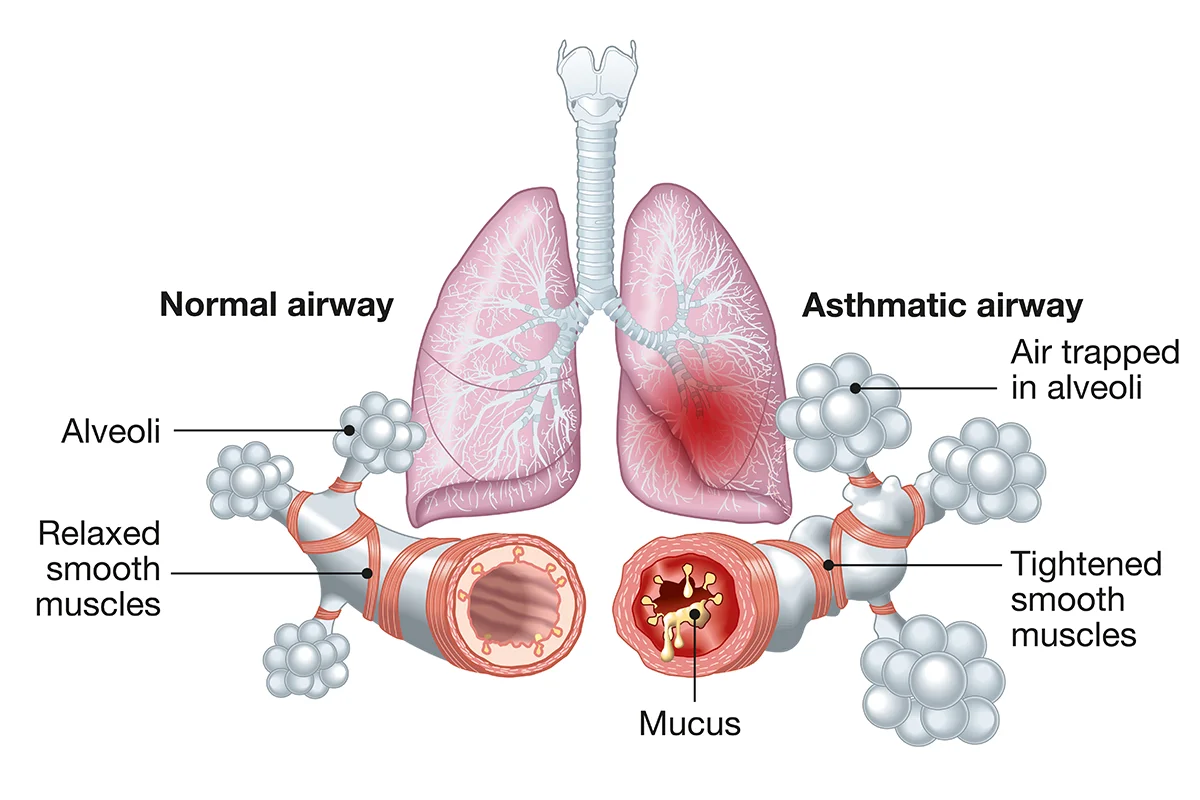
Visual differences between a normal airway and an asthmatic airway
Most people with asthma have flare-ups (also known as asthma attacks) followed by periods without symptoms. Asthma attacks can last for minutes, hours or days. They can become serious if your airflow becomes blocked.
Asthma attack symptoms can include:
- Abnormal breathing or trouble breathing
- Chest pain or tightness
- Cough with or without mucus
- Shortness of breath that gets worse with physical activity
- Skin that pulls in between the ribs when breathing (called intercostal retractions)
- Wheezing
When are asthma symptoms considered an emergency?
Some asthma symptoms can indicate a blocked airway that might need medical attention. These symptoms can include:
- Bluish color to the lips or face
- Drowsiness or confusion
- Extreme difficulty breathing
- Rapid pulse
- Increased anxiety due to shortness of breath
- Increased sweating
Types of asthma
Asthma types can vary and depend on your specific triggers.
- Allergic asthma: This type of asthma is often triggered by allergens like pet dander, dust mites or mold.
- Asthma-COPD overlap syndrome (ACOS): This progressive lung disease occurs in people who have asthma and chronic obstructive pulmonary disease (COPD).
- Exercise-induced asthma: A type of asthma that’s triggered by physical activity or exertion.
- Seasonal asthma: This type of asthma is often caused by cold weather, pollen or other seasonal changes.
- Nonallergic asthma: Stress, colds or other irritants trigger asthma attacks.
- Occupational asthma: A type of asthma caused by exposure to workplace substances, such as chemicals or dust.
How is asthma diagnosed?
Asthma can be diagnosed and treated by different health care providers. Depending on the type of asthma, you may be treated by a primary care provider, pulmonologist, allergist, or an ear, nose and throat (ENT) doctor.
Diagnostic tests can include:
- Allergy tests: Blood tests and skin tests are used to check for reactions to certain allergens that could trigger your asthma.
- Blood tests: These tests are used to measure specific antibodies your immune system makes in response to certain allergens and asthma.
- Imaging tests: Providers will use chest X-rays or CT scans to view your lungs and airways.
- Lung function tests: Pulmonary function tests (spirometry) and peak expiratory flow tests are used to see how well air flows through your lungs.
How is asthma treated?
Treatment for asthma is specific to each person's condition and severity. You’ll work with your doctor on a treatment plan that’s likely to include an asthma action plan to help prevent asthma attacks and manage your symptoms.
Common treatments include:
- Managing and avoiding known triggers
- Utilizing quick-relief medicines or rescue inhalers
- Using controller inhalers for everyday symptom management
What is the difference between a rescue inhaler and a controller inhaler?
Rescue inhalers provide immediate, short-term relief while controller inhalers are for daily use and provide long-term asthma symptom management. Rescue inhalers are great for treating asthma attacks as they're happening and should be used only in emergencies. Controller inhalers are perfect for everyday use and symptom management.
What is an asthma action plan?
Asthma action plans provide important information about your medication and triggers. They also provide a color-coded (green, yellow, red) breakdown of when to use your asthma medication and how much depending on your symptoms:
- Green means you’re doing well, and you have no symptoms.
- Yellow means your asthma is getting worse, and you're exhibiting early symptoms or an attack.
- Red means you may need medical help.
Risk factors for asthma
Anyone is at risk of developing asthma, but there are some factors that can increase your risk:
- Allergies
- Black or Hispanic race or ethnicity
- Exposure to workplace chemicals, tobacco smoke or pollution
- Family history of allergies or asthma
- Obesity
Asthma complications
Asthma attacks can cause breathing problems that can quickly turn severe, or in some events, even fatal. Asthma, and certain asthma treatments, can also lead to complications such as:
- Reduced lung function
- Diabetes
- Infections
- Hypertension (high blood pressure)
- Osteoporosis and fractures
- Sleep issues like sleep apnea
Preventing asthma
While there's no direct way to prevent asthma, there are some actions you can take to lessen your exposure to common asthma triggers and reduce your risk of asthma attacks:
- Avoid secondhand smoke, workplace chemicals and irritants.
- Stay up to date on your vaccines to prevent respiratory infections like COVID-19, flu and RSV.
- Reduce pet dander by keeping animals off furniture and outside the bedroom.
- Keep your house clean and wash bedding regularly to reduce dust and mold.
- Keep your windows closed when pollen count is high.
- Take asthma medications as prescribed by your provider.